• The Future is Balanced: Exploring the Potential of Balancing Robots

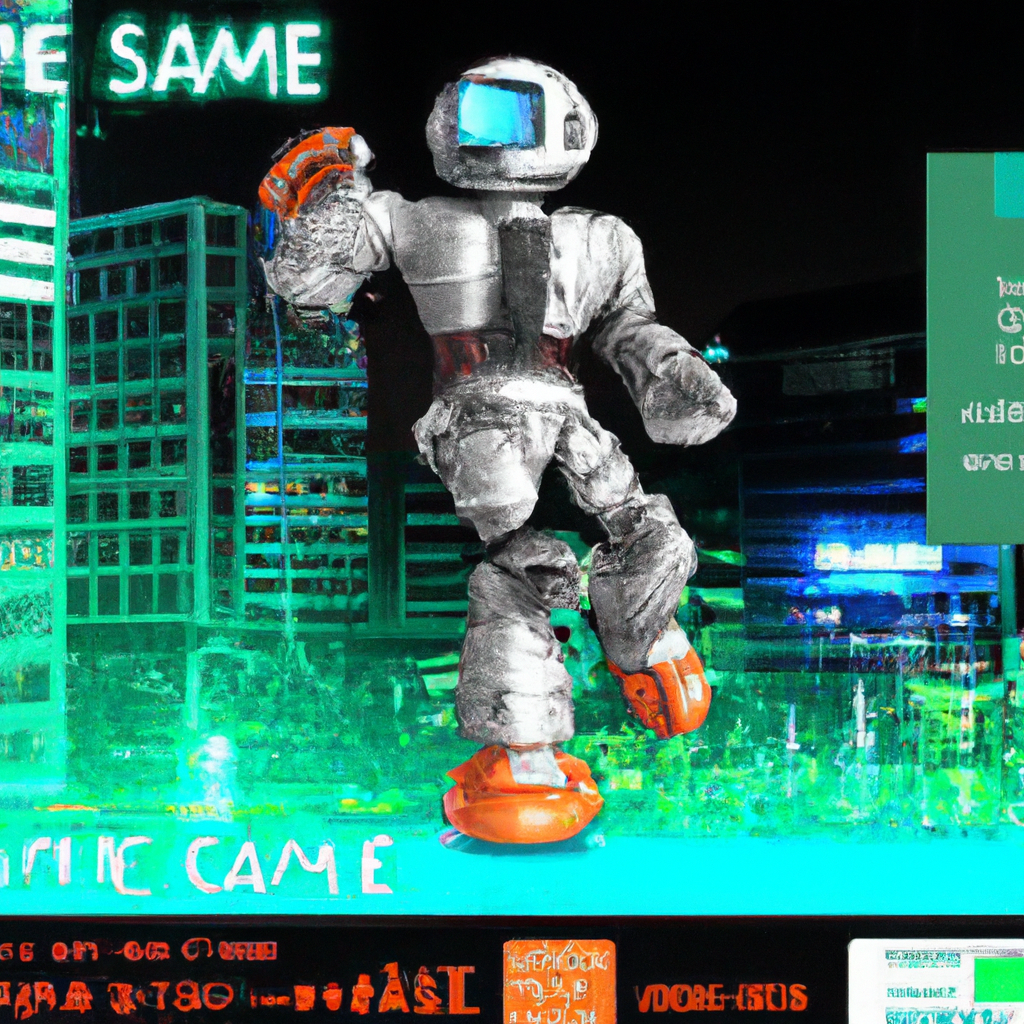
    I recently saw a cool video on Reddit’s r/robotics showing someone testing their balancing robot. It’s fascinating to see how these machines can maintain equilibrium, especially when given a nudge or a push. This got me thinking about the future of robotics and the incredible potential for robots that can adapt and respond to unexpected changes in their environment.

    Balancing robots aren’t just cool to watch; they represent a significant step forward in robotic engineering. The ability to maintain balance dynamically opens up possibilities for robots to navigate complex terrains, work in unpredictable conditions, and interact more safely with humans. Imagine robots that can deliver packages without falling over, assist in search and rescue operations in disaster zones, or even act as personal assistants that can move around your home without bumping into things.

    One of the biggest challenges in creating these robots is developing the algorithms that allow them to process sensory information and make real-time adjustments. The robot needs to know its orientation, velocity, and acceleration, and it needs to be able to predict how its actions will affect its stability. This requires a combination of advanced sensors, powerful processors, and sophisticated control software.

    But it’s not just about the technology; it’s also about the design. The robot’s physical structure plays a crucial role in its ability to balance. Factors like the distribution of mass, the placement of actuators, and the design of the feet or wheels all contribute to its stability. It’s a delicate balancing act (pun intended!) between hardware and software.

    As balancing robots become more sophisticated, I believe we’ll see them integrated into more and more aspects of our lives. From assisting in manufacturing and logistics to providing companionship and care, these robots have the potential to transform the way we live and work. It’s an exciting future to look forward to, and I can’t wait to see what innovations are yet to come.

    “The only way to do great work is to love what you do.”

    — Steve Jobs

  • The Unexpected Genius of the Self-Promotion Thread

    I recently stumbled upon a fascinating thread in the Machine Learning subreddit – a dedicated space for self-promotion. At first, I thought, “Really? A self-promo thread?” But the more I considered it, the more brilliant it seemed. It’s a way to keep the main subreddit clean while still allowing developers, researchers, and entrepreneurs to share their projects, startups, and calls for collaboration. Think of it like a virtual science fair, but for AI and machine learning.

    What I appreciate most is the explicit mention of payment and pricing requirements. This transparency is crucial. It sets clear expectations and prevents misunderstandings. No one wants to waste time exploring a potential collaboration only to find out the budget is unrealistic.

    This approach could foster a more vibrant and connected community. Instead of projects getting lost in the shuffle of a busy subreddit, they have a dedicated space to shine. People seeking collaborators or specific expertise can easily find relevant projects and individuals. Plus, it encourages those with questions to post them in the thread, potentially creating a valuable resource for newcomers.

    I hope more online communities adopt this model. It’s a win-win: content creators get visibility, and the broader community benefits from a curated collection of innovative projects. It acknowledges the importance of self-promotion without letting it take over the main forum. It’s like giving everyone a little corner of the internet to shout from the rooftops – in a polite and organized way, of course. It’s organized, focused, and respectful, and could be a model for other online communities that want to encourage innovation and collaboration.

    “The best way to predict the future is to invent it.”

    — Alan Kay

  • Sci-Fi as High Art: Exploring the Genre’s Masterpieces

    I was browsing Reddit the other day and came across a great question in r/scifi: What science fiction books, movies, or shows do you consider “high art?” It got me thinking about what “high art” even means in the context of science fiction.

    Does it mean complex themes? Stunning visuals? Groundbreaking ideas that make you question reality? I think it’s a combination of all these things, and more. For me, high art in science fiction transcends pure entertainment and becomes a deeply impactful experience.

    One example that immediately springs to mind is Andrei Tarkovsky’s *Solaris*. The film is visually beautiful, deeply philosophical, and emotionally resonant. It explores themes of love, loss, and the nature of consciousness in a way that few other sci-fi films have achieved. Another great example is the book *Dune*, by Frank Herbert. *Dune* creates a vast, complex universe with richly developed characters, political intrigue, and ecological themes that are still relevant today. It’s a prime example of world-building at its finest, a quality I think is essential for “high art” science fiction.

    But high art doesn’t necessarily mean something has to be dense or difficult to understand. *Arrival*, directed by Denis Villeneuve, is a great example of a film that manages to be both intellectually stimulating and emotionally engaging. It tackles complex ideas about language, time, and communication, but it does so in a way that is accessible and moving. I also believe that science fiction as “high art” should encourage conversation, generate new perspectives, and inspire its audience to learn more about the world and universe around them. It needs to stay with you long after you’ve finished reading or watching it.

    What do you think? What science fiction works do you consider to be “high art,” and why?

    The most beautiful thing we can experience is the mysterious. It is the source of all true art and science.

    — Albert Einstein

  • From Fiction to Reality: Building the Enterprise and Inspiring the Future

    Guess what? Someone decided to, quite literally, build the Enterprise. Yes, that Enterprise, the iconic starship from Star Trek. The idea of recreating a fictional spaceship isn’t new, but the sheer scale and ambition of this project caught my eye. It speaks to something deep within us, this desire to bring our dreams, especially those fueled by science fiction, into reality.

    It makes perfect sense to me. As a species, we’ve always been driven by exploration, by pushing the boundaries of what’s possible. Science fiction, at its best, offers us a glimpse of those possibilities, a tantalizing taste of potential futures. Why wouldn’t we want to make those futures real?

    Of course, building a fully functional Enterprise – warp drive and all – is still firmly in the realm of science fiction (for now!). But that doesn’t diminish the value of such endeavors. These projects, whether they’re full-scale replicas or detailed models, serve as inspiration. They remind us that the seemingly impossible can, with enough ingenuity and determination, become reality. They fuel our imagination and encourage us to think big, to challenge the status quo, and to strive for a future that’s even better than the one we can currently imagine.

    And who knows? Maybe, just maybe, someone building an Enterprise today will inspire the engineers and scientists who will build a real starship tomorrow. I know I’m ready to sign up for the first voyage!

    We are all explorers at heart, reaching out to the unknown.

    — Gene Roddenberry


  • The Power of ‘Dumb’ Questions in AI
    Got a Quick Question About AI? Ask Away!

    I stumbled across an old Reddit thread the other day titled “Simple Questions Thread” in the r/MachineLearning subreddit. The idea was simple: a place to ask all those burning, possibly “dumb,” questions about machine learning without fear of judgment. And you know what? It was awesome.

    Sometimes, you just need a quick answer. You’re tinkering with a project, reading a paper, or just plain curious. You don’t want to wade through a textbook or spend hours Googling. You just want a clear, concise explanation.

    That’s where these kinds of threads shine. No question is too basic. Want to know the difference between supervised and unsupervised learning? Need help debugging a Python script for your neural network? Just ask! The community is usually super helpful and quick to respond.

    But here’s the thing: these threads aren’t just for beginners. Even experienced folks can benefit. Maybe you’re exploring a new area of AI and need a quick sanity check on your understanding. Or perhaps you’re looking for different perspectives on a tricky problem.

    I think we need more of these spaces – online and offline. Places where curiosity is celebrated, and no one feels intimidated to ask “obvious” questions. Because let’s be honest, sometimes the “obvious” questions are the ones that unlock the biggest breakthroughs.

    So, what’s your quick question about AI? I’m all ears, and I’m sure others are too. Let’s create our own little “simple questions” thread right here in the comments!<wp:pullquote “className”:”is-style-pullquote”>

    The only way of discovering the limits of the possible is to venture a little way past them into the impossible.

    — Arthur C. Clarke


  • Physics: Not Just Labs Anymore!

    I saw a recent Reddit thread asking about education and career paths in physics. It got me thinking about how much things have changed, and how much they’ve stayed the same. Back when I was starting out, the path was pretty clear: study hard, go to grad school, and then try to land a research position. But now? There are so many more options.

    For one thing, the tech industry is hungry for people with physics backgrounds. Data science, machine learning, even finance – they all need people who can think analytically and solve complex problems. And that’s what physics training gives you.

    But it’s not just about jobs. It’s also about the kind of work you want to do. Do you want to spend your days in a lab, pushing the boundaries of human knowledge? Or do you want to use your skills to build something that will impact millions of people? There’s no right or wrong answer, but it’s important to think about what really motivates you.

    I think the most important thing is to stay curious and keep learning. The world is changing so fast, and the skills that are in demand today might not be in demand tomorrow. But if you have a solid foundation in physics and a willingness to learn, you’ll be well-positioned to succeed in whatever field you choose. Don’t be afraid to explore different areas and see what excites you. Talk to people in different fields, and ask them about their experiences. And most importantly, don’t be afraid to take risks. The best things in life often come from stepping outside of your comfort zone.

    For me, I knew pretty early on that I wanted to share my love of science with others. That’s why I became a science communicator. But everyone’s path is different. The key is to find what you’re passionate about and go for it. The universe is vast and full of possibilities, and there’s a place for everyone in it.<wp:pullquote “className”:”is-style-pullquote”>

    For me, I am driven by two main philosophies: know more today about the world than I knew yesterday, and lessen the suffering of others. You’d be surprised how far that gets you.

    — Neil deGrasse Tyson


  • Mom and Dad, Please Butt Out! How Parental Interference Hurts Relationships

    Ever feel like your parents have *opinions* about your love life? Like, maybe a little *too many* opinions? You’re not alone.

    A new study confirms what many of us have probably already experienced: Parental interference in your romantic relationships can lead to… well, let’s just say it’s not a recipe for family harmony. The study found that when parents meddle, children reported having more strained and chaotic relationships with those parents.

    Think about it. When your parents disapprove, it puts you in a tough spot. You’re trying to build a connection with someone you care about, while also navigating your family’s expectations and potential judgment. It’s a lot to juggle!

    And it makes sense, right? Nobody likes feeling pressured or controlled, especially when it comes to something as personal as who you choose to date.

    So, what’s the takeaway? Maybe parents should take a step back and trust their kids to make their own choices in love. And maybe, just maybe, families will get along a little better.

  • Unleash Your Inner Space Geek: Ask Me Anything!

    Got a Burning Space Question? Ask Away!

    Ever find yourself staring up at the night sky, wondering about something way, way out there? Maybe it’s how rockets even work (defying gravity is pretty cool!), or why the Moon seems to change shape all the time. We’ve all been there.

    So, here’s the deal: I’m opening up the floor for all your space-related questions. No question is too simple or too out-there. Seriously! If you’re curious, I want to hear it.

    Why Ask Here?

    • No Judgement: This is a safe space for space newbies and experts alike. We’re all learning.
    • Simple Explanations: I’ll do my best to break down complex topics into easy-to-understand answers. Think of it as space explained for the rest of us.
    • Community Help: Other space enthusiasts might chime in with their own insights, and we can all learn together!

    What Kind of Questions?

    Anything! Here are a few ideas to get you started:

    • How do black holes work?
    • What’s the deal with dark matter?
    • Could humans ever live on Mars?
    • What are those satellites I see at night?
    • Is there other life in the universe?

    Seriously, anything space-related that’s been bugging you. Don’t be shy – ask away in the comments below! I can’t wait to hear what you’re wondering about.

    Stay curious!
    – EH

    “The cosmos is within us. We are made of star-stuff. We are a way for the universe to know itself.”Carl Sagan

  • Ever Heard of ‘The Man From Earth’?

    Okay, so I stumbled across this movie a while back, and I still think about it. It’s called ‘The Man From Earth.’ Maybe you’ve seen it? If not, trust me, give it a shot.

    Why I’m Raving About It

    Here’s the thing: it’s pure storytelling. No massive explosions. No CGI overload. Just a really, really good idea, explored brilliantly. The entire movie basically takes place in one room. A professor is leaving his job, and his colleagues come to say goodbye. Then he drops a bomb: he claims to be thousands of years old. What follows is a conversation. A long, fascinating, thought-provoking conversation. That’s it.

    Why It Works

    The Idea. The core concept is just so compelling. What if someone *had* lived that long? What would they have seen? What would they know?

    The Writing. The dialogue is sharp and intelligent. It keeps you hooked.

    The Acting. The cast is great. They make you believe in this unbelievable situation.

    No Frills, All Thrills. Seriously, this movie proves you don’t need a Hollywood budget to tell a great story. ‘The Man From Earth’ is proof that sometimes, less is more. It’s all about the characters and the ideas. So, if you’re looking for something different, something that will make you think, check it out. You might be surprised.

    Stay curious!
    – EH

    “Imagination is more important than knowledge. For knowledge is limited, whereas imagination embraces the entire world, stimulating progress, giving birth to evolution.”Albert Einstein

  • Lost in the Physics Maze? Let’s Find Your Way!

    Okay, so you’re staring down the barrel of some big decisions about physics, huh? Whether it’s college, grad school, or even figuring out what the heck you can *do* with a physics degree, it can feel overwhelming. I get it! Think of this post as your friendly nudge in the right direction. I’m not gonna pretend I have *all* the answers, but I can point you to some seriously helpful resources.

    Need Advice? Ask Away! Seriously, don’t be shy about asking for help. There are tons of people who’ve been where you are and are happy to share their experiences.

    Grad School App Stress? Applying to grad school is a beast. A few years back, some kind souls on Reddit put together a panel of newly accepted grad students who answered all sorts of application questions. It’s a goldmine of information if you’re stressing about your statement of purpose or wondering what schools to apply to. Seriously, check it out; you can find it in the original Reddit post at the beginning.

    Helpful Communities Beyond that one thread, there are entire online communities dedicated to helping folks like you (and me!). Here’s a quick list of subreddits you might find useful:

    These communities are fantastic resources for getting different perspectives and finding answers to specific questions you might have.

    So, take a deep breath. You’ve got this! And remember, you’re not alone in figuring things out. There’s a whole community of people ready to help you along the way. Why not start right here?! Post a question in the comments below and you might just connect with another curious and helpful science aficionado in our community!

    Stay curious!
    – EH

    “If I have seen further than others, it is by standing upon the shoulders of giants.” — Isaac Newton