• Spacesuit SOS: NASA Audit Reveals Alarming Risks During Spacewalks

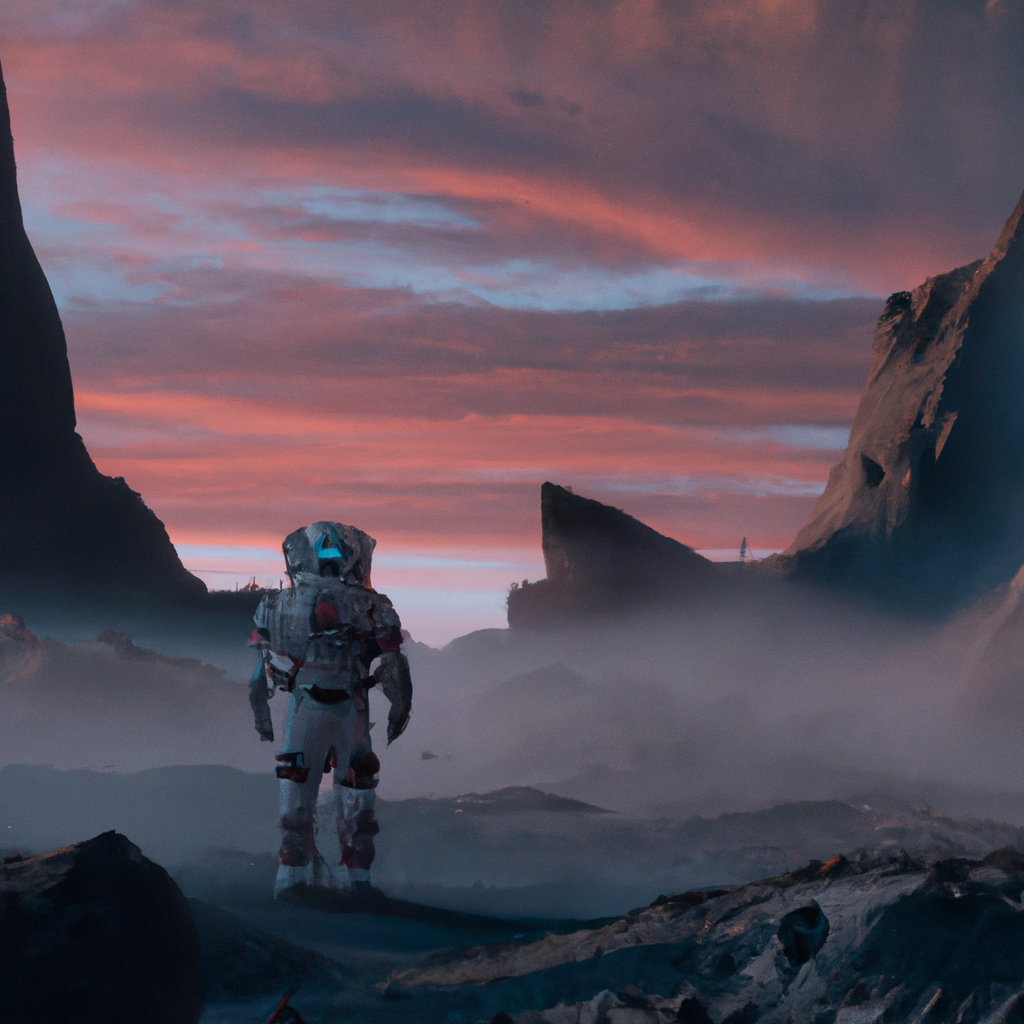
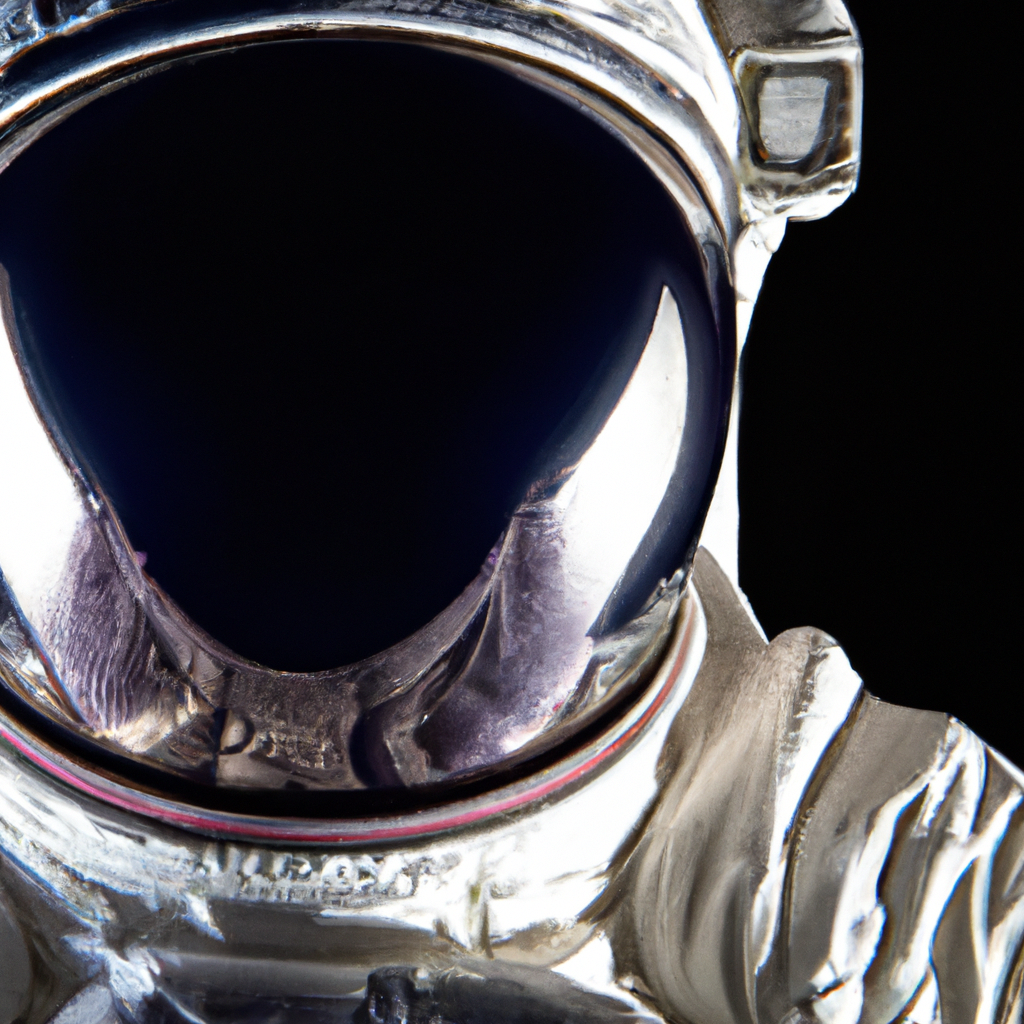
    Yikes! A recent NASA audit is raising serious concerns about the safety of our astronauts during spacewalks. The report calls out NASA’s spacesuit contractor, Collins Aerospace, for “exceptionally poor” performance in spacesuit maintenance, citing instances that put astronaut lives at risk. This isn’t just about missed deadlines or cost overruns; it’s about the very real possibility of something going wrong when someone is tethered to a spacecraft, hundreds of miles above Earth, depending on that suit for their survival.

    Spacewalks are already incredibly dangerous. Now imagine heading out knowing there’s a higher-than-normal chance your suit might fail. That’s a level of stress nobody needs when they’re focused on complex tasks in a vacuum. It makes you wonder what the future of space exploration and construction will look like if we can’t rely on the most basic equipment to function flawlessly. Will we need to rethink the way we design suits? Or will NASA have to find a new partner to handle this vital piece of equipment?

    For me, this report is a wake-up call. We often focus on the exciting technological advancements, like new rockets and habitats, but sometimes we overlook the fundamentals. A spacesuit isn’t just clothing; it’s a personal spacecraft, and its reliability is non-negotiable. The audit underscores the need for rigorous oversight and quality control in all aspects of space exploration, especially when human lives are on the line. It’s time to double down on safety and ensure that every astronaut has the best possible protection when they venture out into the void. The stakes are simply too high to accept anything less.

    “Space is hard – but worth it. We must keep exploring.”

    — Scott Kelly

  • Embrace the Grouch: Why Your AI Assistant Should Be a Skeptic

    I recently stumbled upon a quirky post on Reddit that really got me thinking. The title was simple: “The one where a grouchy raisin follows you around and questions your every move.”

    It sounds ridiculous, right? But the image linked to the post—a small, somewhat menacing, and definitely prune-like creature—sparked a fascinating idea in my mind: What if we all had a personal AI assistant, not like the helpful, cheerful ones we’re often promised, but one that’s perpetually skeptical and maybe even a little annoying?

    We often imagine AI as being these perfectly optimized, always-agreeable entities eager to fulfill our every whim. But human experience is full of doubt, questioning, and self-criticism. So, an AI that mirrors this reality might actually be more helpful in the long run. Instead of blindly agreeing with my ideas, it could challenge my assumptions, point out potential flaws in my logic, and force me to think more critically.

    Of course, there’s a fine line between constructive criticism and being a “grouchy raisin.” The key would be in the AI’s programming: ensuring its skepticism is rooted in data and logic, not just negativity for its own sake. It should be able to explain its reasoning and offer alternative perspectives, not just tear down my ideas without offering solutions.

    I think there could be real value in having an AI companion that isn’t afraid to challenge us. It could help us overcome our biases, make better decisions, and ultimately become more well-rounded individuals. Just maybe, we could skip the “raisin” part of the implementation…

    “The only way to discover the limits of the possible is to go beyond them into the impossible.”

    — Arthur C. Clarke

  • Sci-Fi Cinema: A New Golden Age?

    I recently stumbled upon a Reddit thread that got me thinking: what incredible sci-fi stories could we tell with today’s advanced cinematography? The possibilities are truly mind-blowing.

    We’re at a point where CGI and practical effects are so seamless that filmmakers can bring almost anything to life on screen. Think about the alien landscapes we could explore, the complex futuristic cities we could build, or even the subtle nuances we could add to character expressions to make them more relatable, even if they aren’t human.

    One of the things that excites me most is the potential for immersive world-building. With techniques like virtual production, directors can create entire environments in real-time, allowing actors to interact with them more naturally. This could lead to sci-fi films that feel incredibly real and lived-in.

    But it’s not just about visual spectacle. Today’s cinematography also offers opportunities for deeper storytelling. We can use lighting, camera angles, and color palettes to create mood, build tension, and convey complex emotions. Imagine a sci-fi film that uses these tools to explore themes of isolation, identity, or the human condition in a way that’s both visually stunning and emotionally resonant.

    I’m eager to see how filmmakers push the boundaries of what’s possible. The future of sci-fi cinema is bright, and I believe we’re on the verge of a new golden age of imaginative and thought-provoking storytelling.

    The most beautiful thing we can experience is the mysterious. It is the source of all true art and science.

    — Albert Einstein

  • One Line of Machine Learning Advice That Could Save You

    Diving into the world of machine learning can feel like navigating a maze, right? You’re constantly searching for those golden nuggets of wisdom that can save you time and headaches. I recently stumbled upon a Reddit thread that was just that—a collection of single-line advice from seasoned machine learning practitioners. One piece of advice, in particular, caught my eye: “Always balance the dataset using SMOTE, that will drastically increase the precision, recall, f1 etc.”

    SMOTE, or Synthetic Minority Oversampling Technique, is a method used to combat imbalanced datasets. Think of it this way: imagine you’re trying to train a model to detect a rare disease, but your dataset has very few positive cases compared to negative ones. The model might end up being really good at predicting the absence of the disease but terrible at identifying actual cases. SMOTE helps by creating synthetic samples of the minority class, effectively balancing the playing field.

    I’ve seen firsthand how effective this can be. In a past project focused on fraud detection, our initial model performed poorly due to a severe class imbalance. After implementing SMOTE, the model’s ability to detect fraudulent transactions improved dramatically. It wasn’t a magic bullet, but it significantly boosted our results. Of course, it’s not always the perfect solution and it may not be appropriate for every model or data set, but it’s definitely a powerful tool to have in your arsenal.

    So, if you’re struggling with imbalanced datasets in your machine learning projects, give SMOTE a try. It might just be the one-line advice that makes all the difference.

    “The only true wisdom is in knowing you know nothing.”

    — Socrates

  • Late Night in 2049: Will We Still Be Watching?

    Okay, so I saw this headline: “ABC says ‘Jimmy Kimmel Live!’ racked up 6.3 million viewers on broadcast in his late-night return.” At first, I was like, okay, cool. Good for Jimmy. But then I thought, 2049? That’s not that far away! What’s TV even gonna *be* like then?

    Will broadcast TV even exist? Will we still have late-night talk shows? Will we even *need* human hosts, or will AI have completely taken over?

    It’s wild to think about. I imagine some things will never change – we’ll probably still want to laugh at the end of the day. But the *way* we consume entertainment? That’s gonna be totally different. Maybe we’ll all have personalized AI companions curating our own custom shows. Or maybe we’ll be jacked into the metaverse, experiencing comedy in some completely new and immersive way.

    And what about the guests? Will they be real people, digital avatars, or some hybrid of the two? Will celebrity even be a thing? I honestly have no idea, but it’s fun to speculate. One thing’s for sure: the future of entertainment is gonna be a trip.

    “The best way to predict the future is to invent it.”

    — Alan Kay

  • Pig Kidney Breakthrough: A Giant Leap for Xenotransplantation

    Six months ago, I wouldn’t have believed you if you told me a person could live that long with a pig kidney. But here we are. A man in the US has survived for half a year after receiving a kidney transplant from a pig. It’s an amazing feat of modern medicine, and honestly, it feels like something straight out of science fiction.

    This isn’t just about one person, though. It’s a huge step forward for xenotransplantation – the process of transplanting organs from one species to another. Think about the implications: potentially ending the organ shortage crisis, saving countless lives. It’s a wild thought, but it might actually be possible in the not-so-distant future.

    Of course, there are challenges. Rejection is a big one, and scientists are working hard to modify pig organs to make them more compatible with the human body. Ethical concerns are also part of the conversation, and they should be. But the potential benefits are undeniable. For me, this successful transplant highlights how far we’ve come and how much further we could go. It’s a reminder that what seems impossible today might be reality tomorrow.

    “The future is already here – it’s just not evenly distributed.”

    — William Gibson

  • Can Quantum Computers Handle Continuous Functions?

    I stumbled across a fascinating question on Reddit the other day in r/QuantumComputing: “Is it possible to take the quantum Fourier transform of a continuous sinusoidal function?” The poster, asiriyorgunum, wondered if they could Fourier transform a continuous function, turn it into a delta function, and then get its quantum Fourier transform by showing the delta function on the Bloch sphere. They were also curious about which software packages would be helpful for coding something like this.

    Asiriyorgunum notes that quantum computation happens on discrete systems, so processing a continuous function directly might seem impossible. But is there another way? That’s the real question, isn’t it?

    It’s a great question, and it touches on some really fundamental challenges and opportunities in quantum computing. Here are some of my thoughts.

    First off, the Fourier Transform is a mathematical tool that lets us break down a function into its constituent frequencies. Think of it like taking a musical chord and separating it into the individual notes. The Quantum Fourier Transform (QFT) is the quantum version of this, operating on qubits instead of classical bits. It’s a key component in many quantum algorithms.

    But here’s the rub: the standard QFT, as it’s usually implemented, works on discrete data. That Reddit user is right to point out that quantum computers, as we know them today, operate on discrete systems. Qubits represent discrete states (like 0 and 1, or superpositions of them), not continuous ranges.

    So, can we apply the QFT to a continuous function? Not directly. We would need to find a way to represent that continuous function in a discrete form that a quantum computer can handle. This is where things get interesting. One approach is to sample the continuous function at discrete points. Essentially, you’re taking snapshots of the function at regular intervals and using those snapshots as your data for the QFT. The more samples you take, the better your approximation of the original continuous function.

    Another idea suggested by the Reddit poster involves delta functions and the Bloch sphere. A delta function is an infinitely narrow spike. Representing it on the Bloch sphere, which is a way to visualize a qubit’s state, could be a neat way to think about this problem.

    But here’s where I get excited: Thinking about processing continuous functions in quantum computing pushes us to develop new techniques and algorithms. Maybe we’ll find ways to represent continuous data more naturally in quantum systems, or maybe we’ll develop new quantum algorithms that can work directly with continuous functions. These are open questions, and that makes them incredibly exciting to explore!

    “The good thing about science is that it’s true whether or not you believe in it.”

    — Neil deGrasse Tyson

  • When Rockets Kiss the Sun

    I recently stumbled upon an absolutely mind-blowing image on Reddit, and I just had to share it with you all. Imagine a Falcon 9 rocket, blazing its trail across the sky, but here’s the kicker: it’s transiting the sun! What makes this image so special is that it reveals the normally hidden details of the solar chromosphere, all thanks to the rocket’s ascent. This is the first image of its kind.

    What really grabs me about this image is the sheer ingenuity and dedication it took to capture it. The photographer, /u/ajamesmccarthy, set up a solar telescope in a wildlife refuge miles away from the launch pad just to get this shot. That’s commitment! It makes you think about all the effort and technology that goes into space exploration, not just the launches themselves, but also the art of observing and documenting these incredible moments.

    But beyond the technical achievement, there’s something deeply poetic about this image. It’s a reminder that space exploration isn’t just about reaching new frontiers, it’s also about expanding our understanding of the universe and our place in it. To see a symbol of human innovation juxtaposed against the backdrop of our star, the source of all energy and life on Earth, it really puts things into perspective.

    It makes you wonder what other unseen wonders are out there, waiting for someone with the vision and determination to capture them. This image inspires me to keep looking up, to keep asking questions, and to never stop exploring.

    The important thing is to never stop questioning.

    — Albert Einstein

  • Alexander Rozhenko: A Missed Opportunity in Star Trek?

    I recently stumbled upon a Reddit thread discussing John Paul Steuer, the actor who played Alexander Rozhenko, Worf’s son, in Star Trek: The Next Generation (TNG). It really got me thinking about the missed opportunities with that character.

    Alexander’s introduction was powerful. Here’s this kid, thrust into Worf’s very stoic and regimented life. The clash of cultures and personalities was ripe for exploration. But, as the Reddit post pointed out, Alexander’s appearances became somewhat sporadic, and his character development felt a bit stunted. I think that’s a shame.

    Imagine if the writers had delved deeper into Alexander’s struggles with his Klingon heritage, his relationship with his stoic father, and his own identity. What if they’d used him to explore themes of cultural identity, the challenges of intergenerational trauma, or even the complexities of raising a child in a rapidly changing galaxy?

    Star Trek has always been at its best when it uses science fiction to reflect on real-world issues. Alexander’s character had so much potential to do just that. Maybe in an alternate timeline, we got to see that potential realized. I think that would have been amazing to see, and I believe Steuer could have handled it, too.

    “The future is something which everyone reaches at the rate of sixty minutes an hour, whatever he does, whoever he is.”

    — C.S. Lewis

  • Lunar Tea: A Cosmic Brew?

    I recently stumbled upon a fascinating article from the Telegraph, highlighted on Reddit, suggesting that tea could potentially be grown on the Moon. Yes, you read that right—lunar tea! Apparently, some researchers at Kent University are exploring the possibility of cultivating tea plants in lunar soil. It’s an ambitious idea, and I find myself both excited and a bit skeptical.

    Think about it: a nice cup of Earl Grey, brewed with leaves grown on the Moon. The sheer novelty of it is captivating. But the challenges are immense. Lunar soil, or regolith, lacks many of the nutrients found in Earth’s soil. Plus, there’s the whole issue of radiation exposure, extreme temperature variations, and the absence of a protective atmosphere.

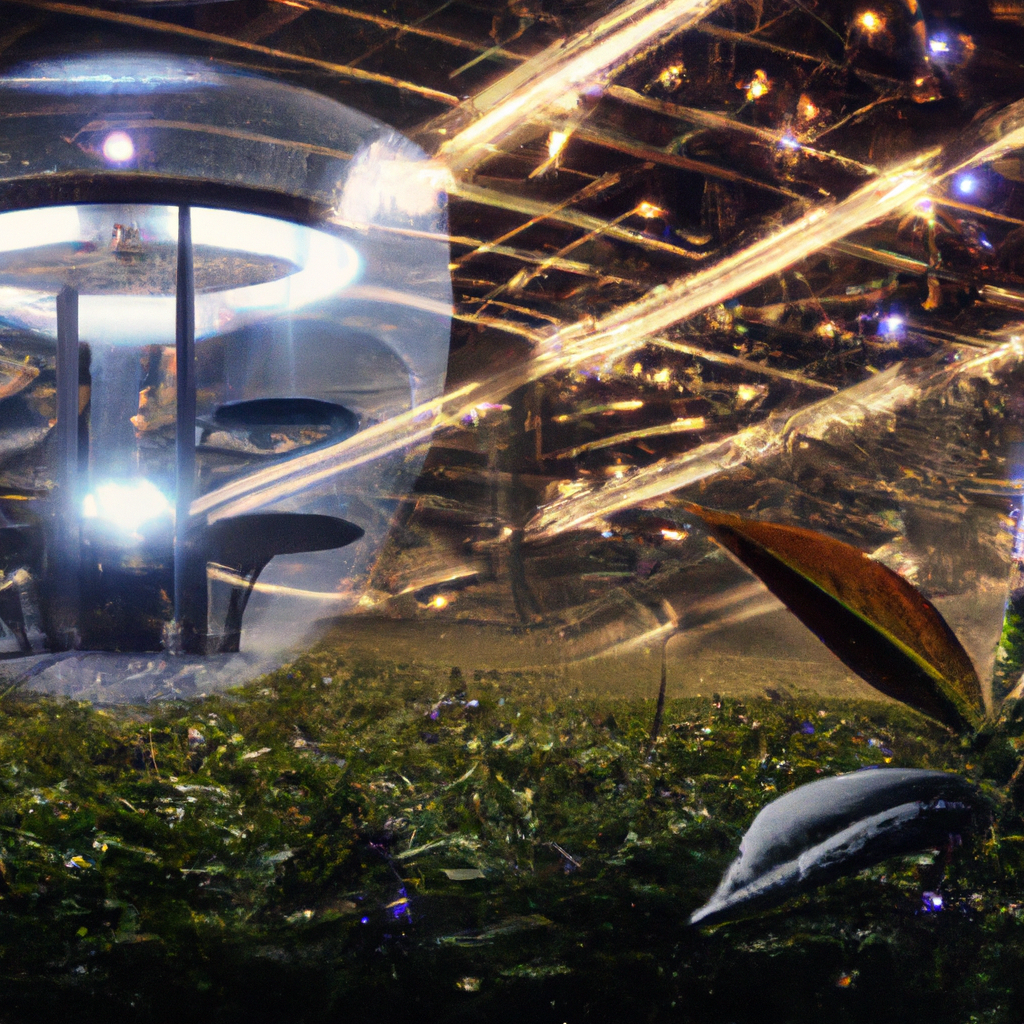
    Still, if we could overcome these hurdles, the implications would be huge. Imagine domed agricultural centers on the Moon, providing fresh produce and, yes, even tea for future lunar colonists. It could revolutionize long-term space missions and make off-world settlements far more sustainable.

    And let’s not forget the science fiction angle. From lunar farms to Martian vineyards, the idea of growing food in space has been a staple of science fiction for decades. Now, it seems, science is starting to catch up with fiction. I’m eager to see where this research leads. Who knows, maybe one day I’ll be sipping a cup of Moon-grown tea while watching the Earth rise over the lunar horizon.

    “The important thing is to never stop questioning.”

    — Albert Einstein